Source Rocker Switch for Home, Hotel, and Commercial Use
Source 30 rocker switch options from verified suppliers. Compare models like IRS-202-3C and M101, featuring Type C contacts, built-in structures, and certifications including CCC, CE, and UL for home, hotel, and commercial applications.
Key considerations
Products List


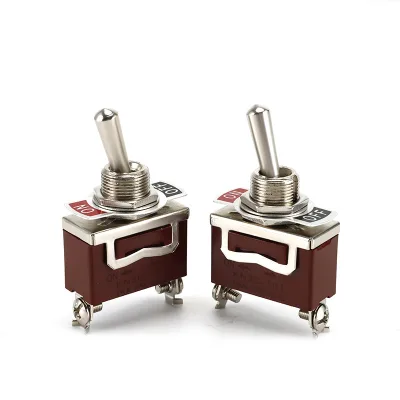


Comprehensive Sourcing Guide
Strategic Sourcing Guide for Rocker Switch Procurement
The global market for rocker switches remains a critical component for electrical systems across residential, commercial, and industrial sectors. For procurement professionals, navigating this category requires a disciplined approach that distinguishes between generic observations and verified product specifications. The current supply landscape features a diverse array of models, ranging from single-pole on-off configurations to complex multi-control switches with built-in amplifiers. Buyers must rigorously evaluate technical attributes, certification validity, and structural integrity to ensure that selected components meet the specific operational demands of their end products. This guide provides a structured framework for sourcing rocker switches, grounded in observable product data and established industry practices.
Technical Specifications and Functional Variations
Understanding the technical architecture of rocker switches is the first step in effective sourcing. The product data indicates a significant variation in internal structures, primarily categorized as "Power Built-in Type" or "Amplifier Built-in Type." This distinction is vital for system integration, as the former implies a self-contained power mechanism, while the latter suggests a need for external signal processing or amplification. The detection methods also vary, with "Retro-reflective Mode" noted in specific listings, indicating optical sensing capabilities that may be required for non-contact or safety-critical applications.
Electrical ratings define the operational limits of these components. Observed data points to a rated voltage of 3V (Vo-P) in certain configurations, while others support a broader operating voltage range of 1-25V (Vo-P). Maximum voltage tolerances are explicitly listed as 125V and 250VAC, which are standard thresholds for general-purpose switching. Current ratings are equally critical; specific models are rated for a maximum of 5mA, suggesting their suitability for low-power control circuits rather than high-load power distribution. The contact types observed include "Type c Contact" and "Type b Contact," which dictate the physical mating interface and circuit topology.
The mechanical configuration further diversifies the selection criteria. Products are available as "Single-pole on-off Switches" or "Double Control Switches," with some featuring "Multi Control Switch" capabilities. The actuation principle is identified as "Capacitive" in several instances, offering a touch-sensitive interface that eliminates mechanical wear associated with traditional levers. The physical feature is consistently described as a "Rocker" type, providing the characteristic tactile feedback and visual indication of state. Additionally, the presence or absence of an integrated lamp is a key differentiator, with some models specified as "Without Lamp," requiring external illumination solutions for visibility in low-light environments.
Compliance and Certification Verification
In the B2B procurement of electrical components, certification is not merely a formality but a prerequisite for market access and liability protection. The observed product data highlights a mix of certifications, including CCC, CE, UL, and ISO. These designations must be verified against the specific target market of the final product. For instance, the CCC mark is essential for sales within China, while CE compliance is mandatory for the European Economic Area. UL certification is often required for North American markets, particularly for applications involving high safety standards.
The data also references the ROHS standard, indicating compliance with restrictions on hazardous substances. While this is a common requirement for electronic components, buyers must ensure that the specific batch of switches carries valid, up-to-date documentation. Some listings explicitly state "Standard Export Carton" or "Standard Export Catron" as packaging, which often implies adherence to international shipping and safety standards, though the primary focus must remain on the electrical certifications.
It is crucial to distinguish between the certification of the product model and the certification of the manufacturing facility. The provided facts list certifications alongside specific product models such as IRS-202-3C and SNCK-3610. Procurement teams should request current certificates of conformity for each model number rather than relying on general brand claims. The presence of "Dielectric Strength" as a listed attribute further underscores the importance of insulation testing, which is often a component of the broader certification process. Buyers should verify that the dielectric strength values meet the specific voltage requirements of their application to prevent insulation breakdown.
Cost Drivers and Pricing Dynamics
The pricing structure for rocker switches is influenced by a complex interplay of technical specifications, volume, and customization requirements. The observed price range in the market spans from 0.1 to 4 USD, a wide variance that reflects differences in complexity and performance. Lower-cost units typically correspond to basic single-pole on-off switches with standard voltage ratings and minimal features. In contrast, higher-priced units often incorporate advanced features such as amplifier built-in types, capacitive principles, or specific certifications like UL.
Volume is a primary driver of cost efficiency. The observed Minimum Order Quantity (MOQ) ranges from 20 to 5000 units. Small orders near the 20-unit threshold will likely incur a higher per-unit cost due to setup and handling fees. Conversely, orders approaching the 5000-unit mark can leverage economies of scale to reduce the unit price significantly. Buyers must balance their immediate inventory needs against the potential for cost savings through larger volume commitments.
Customization is another significant cost factor. The product data confirms that customization is available, which can include modifications to the rocker color, the inclusion of lamps, or specific wiring configurations such as "Null Line and Live Line." Customization often requires dedicated tooling or production line adjustments, leading to higher unit costs and potentially longer lead times. Additionally, the weight of the component, observed at 0.3G, may influence shipping costs, particularly for high-volume orders where weight is a primary determinant of freight charges.
Typical Applications and Usage Scenarios
Rocker switches serve a broad spectrum of applications, ranging from simple home appliances to complex commercial systems. The observed usage categories include "Start Button," "Reset Button," "Check Button," "Control Button," "Limit Button," and "Change-over Switch." These functions indicate the versatility of the component in various control circuits. The specific application areas listed cover "Home," "Commercial," "Hotel," "Apartment/Villa," "Lighting," "Electronics," and "Home Appliance."
In residential settings, the "Capacitive" principle and "Rocker" feature are particularly valuable for modern lighting controls and smart home interfaces, offering a sleek, touch-sensitive operation. For commercial and hotel environments, the durability and "Insulation" protection features are paramount, ensuring reliable performance under frequent use. The "Electrical Appliance" usage category suggests that these switches are integral to the control panels of various household devices, where safety and reliability are non-negotiable.
The "Protection" attributes, described as "Insulation" and "Durable," are critical for applications in harsh environments or where user safety is a primary concern. The "Wiring" configuration of "Null Line and Live Line" is standard for AC applications, ensuring proper circuit isolation. Buyers should match the specific usage requirements of their product design with the switch's rated voltage and current capabilities. For instance, a switch rated for 5mA is suitable for control logic but insufficient for driving high-power loads directly.
Supplier Evaluation and Operational Due Diligence
Evaluating suppliers requires a focus on consistency, transparency, and logistical capability. The product data indicates origins in "Ningbo" and "China," regions known for a high concentration of electrical component manufacturers. While the brand "saipwell" and "PIONEER" are mentioned, buyers should avoid relying solely on brand recognition and instead verify the specific manufacturing capabilities of the supplier.
Key evaluation criteria include the supplier's ability to provide valid certification documents for each batch, their capacity to handle the required MOQs, and their track record for on-time delivery. The "Standard Export Carton" and "1PC/Poly Bag, 10PCS/Inner Box, 100PCS/Outer Carton" packaging details suggest a mature supply chain capable of handling international logistics. However, buyers must confirm that the packaging is robust enough to protect the switches during transit, especially given the delicate nature of the internal contacts and the rocker mechanism.
Lead times and production capacity are also critical factors. While specific lead times are not provided in the data, the range of MOQs suggests that suppliers may have varying production scales. A supplier capable of fulfilling orders up to 5000 units likely has a more robust production line than one limited to small batches. Buyers should inquire about the supplier's quality control processes, including in-line testing and final inspection protocols, to ensure that the delivered products meet the specified technical parameters.
Quality Control and Long-Term Procurement Strategy
Ensuring long-term reliability requires a robust quality control strategy. The "Condition: New" attribute is a baseline expectation, but buyers must go further by verifying the physical and electrical performance of the switches. The "Weight: 0.3G" specification serves as a quick visual and tactile check for authenticity and consistency. Deviations from this weight could indicate manufacturing defects or the use of substandard materials.
For long-term procurement, establishing a relationship with a supplier who offers consistent quality and responsive support is essential. The availability of "Customization" allows for product evolution, but it requires clear communication and agreed-upon specifications to avoid discrepancies. Buyers should implement a sampling protocol for initial orders, testing the switches for dielectric strength, contact resistance, and mechanical durability before committing to large-scale production.
The "Standard" designation in the product data implies adherence to general industry norms, but buyers should define their own specific standards for critical applications. Regular audits of the supplier's production process and periodic re-testing of samples can help maintain quality over time. Additionally, considering the "Protection" features such as insulation and durability, buyers should assess the environmental conditions in which the switches will operate and select components that can withstand those conditions without degradation.
Conclusion
Sourcing rocker switches effectively requires a comprehensive understanding of technical specifications, compliance requirements, and market dynamics. By carefully analyzing the variations in structure, voltage ratings, and certification status, buyers can make informed decisions that align with their product needs. The wide range of applications and the availability of customization options provide flexibility, but they also demand rigorous supplier evaluation and quality control. As the market continues to evolve, maintaining a disciplined approach to procurement will ensure the reliability and safety of the final products. Buyers should prioritize verified data and established standards over unverified claims to mitigate risk and optimize value in their supply chain.
FAQs
What certifications are available for these rocker switches?
Available certifications include CCC, CE, UL, and ISO depending on the specific model. Buyers must verify the exact certification for each product model like IRS-202-3C before purchasing to ensure compliance with their target market regulations.
Which voltage ratings apply to the observed rocker switches?
Rated voltages vary from 3V (Vo-P) to maximum tolerances of 125V and 250VAC. Operating voltage ranges are typically 1-25V (Vo-P), so select models based on your specific circuit requirements to avoid electrical failure.
Can these switches be customized for specific applications?
Yes, customization is available for various attributes like color, lamp inclusion, and wiring configurations. Buyers should confirm specific customization needs with the supplier as this may affect unit costs and production lead times significantly.
What is the typical minimum order quantity for these switches?
The minimum order quantity ranges from 20 to 5000 units depending on the supplier and product model. Smaller orders near 20 units often cost more per piece, while larger volumes near 5000 units leverage economies of scale.
Where are these rocker switches typically manufactured?
Products originate from locations such as Ningbo and China. Buyers should verify the specific origin for each batch to ensure it meets their regional sourcing preferences and logistical requirements for international shipping.
What structural types are available for these switches?
Structures include Power Built-in Type and Amplifier Built-in Type. The choice depends on whether your system requires a self-contained power mechanism or external signal processing capabilities for proper integration.